Wildland Committee
|
2009 Wildland Fire School -- Fort Hunter Liggett |
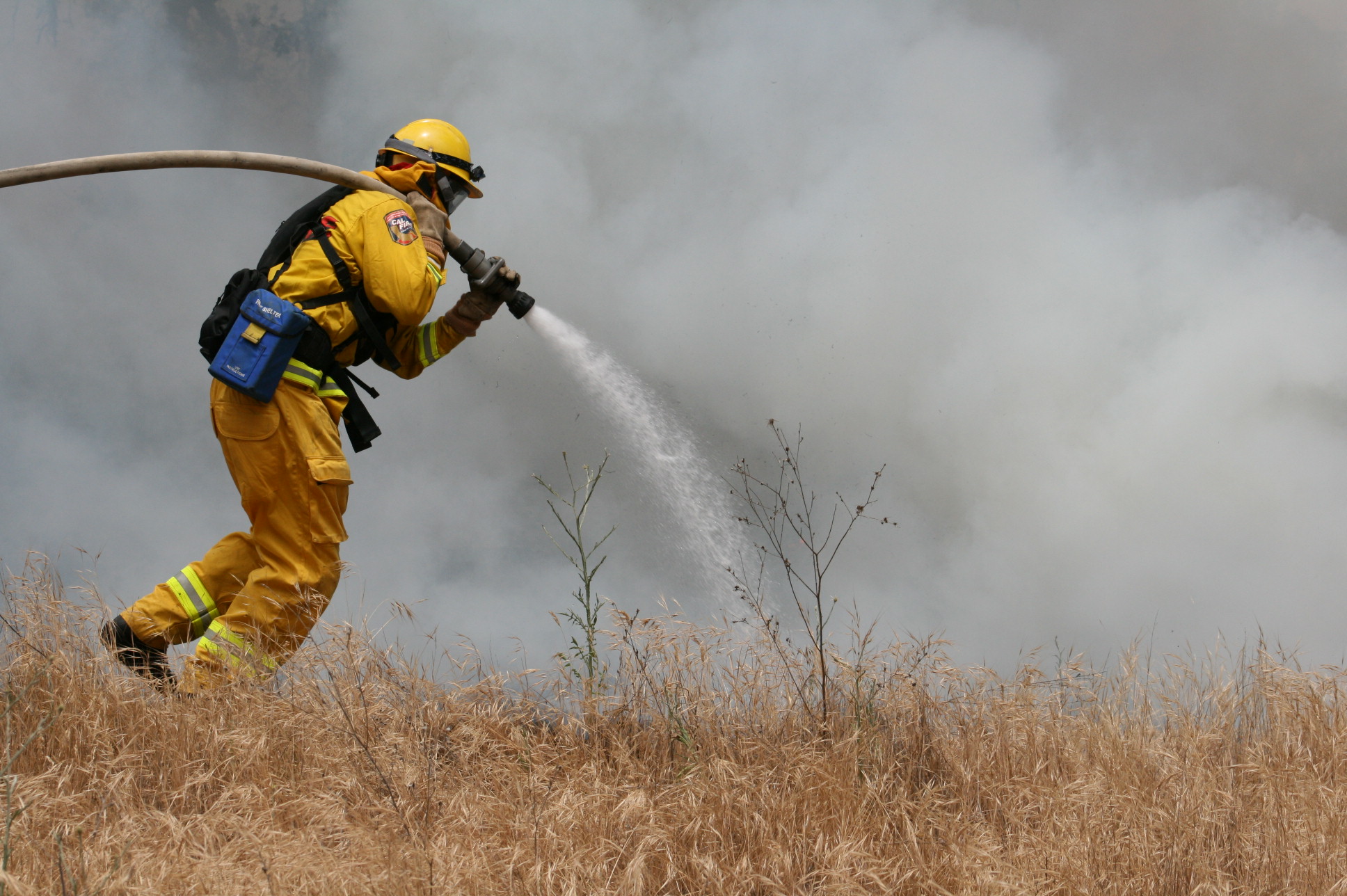
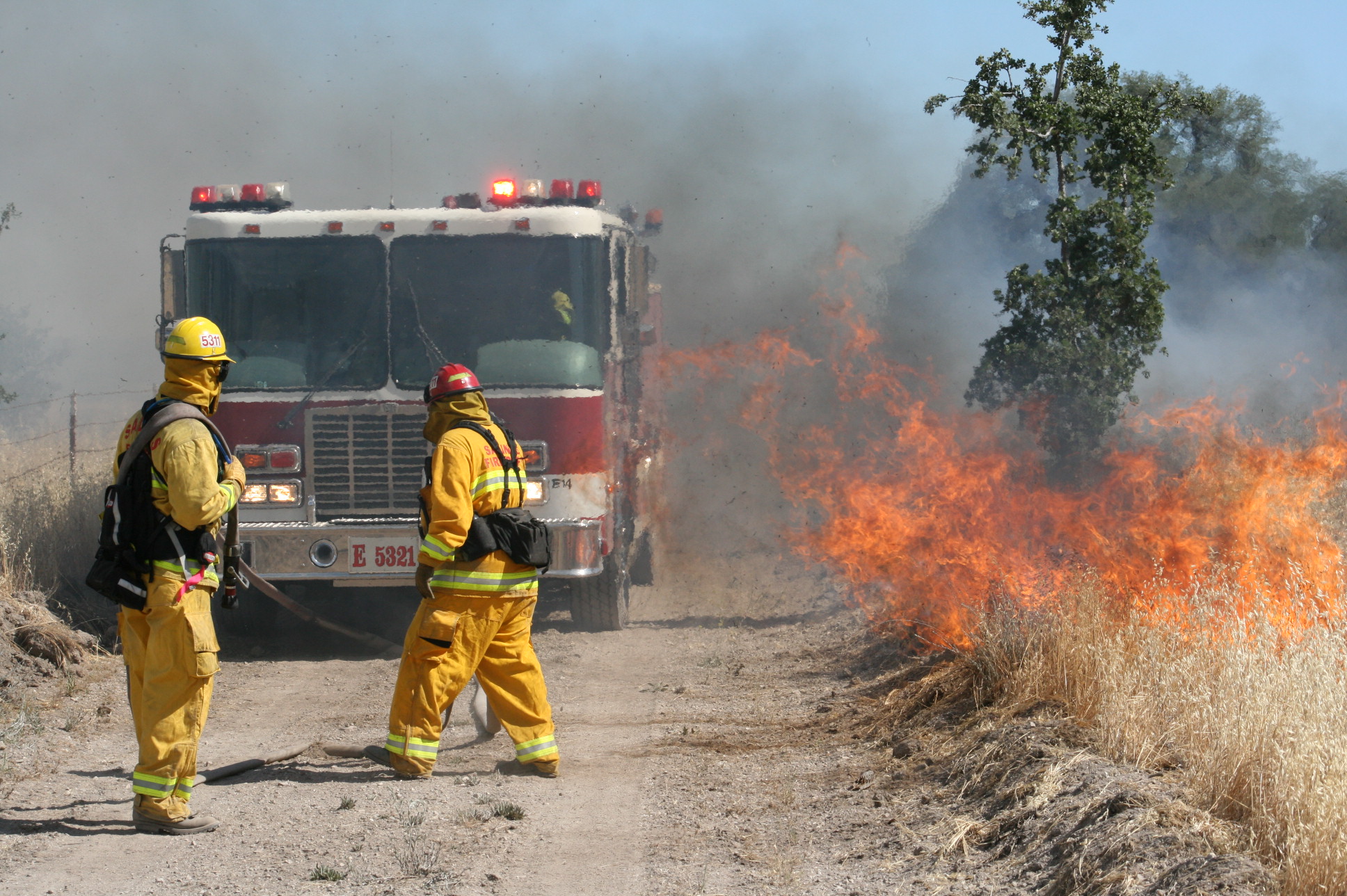
The Wildland Committee of the Monterey County Fire Training Officers Association is responsible for planning and organizing our annual Wildland Fire School at Fort Hunter Liggett. With the invaluable support and cooperation of the Fort Hunter Liggett Fire Department, we have been able to offer the school to the California Fire Service for over 25 years. During this time, thousands of fire service personnel have been taught wildland firefighting techniques and operations under live fire conditions.
The school is “incident based” and runs for three consecutive days. The school operates from a base camp established at the Fort Hunter Liggett Campgrounds. Fire agencies from all over California attend the school and are taught wildland firefighting techniques and operations including wildland firefighter safety, hand tool operation, progressive hose lays, mobile attack, and much more. An assigned Training Specialist provides coordination for trainees working on their positional Taskbooks.
Registration for the school includes free camping for the entire stay, and meals provided by a CALFIRE Mobile Kitchen.
Check out our Photo Gallery for pictures of the 2007, 2008, and 2009 Wildland Fire School.
2009 Wildland Fire School Summary
The 2009 school was a great success and one of the best we ever had. Over 70 engines and nearly 300 students participated in the school. Burning conditions were idea, the weather cooperated, and our safety record was excellent.
A school of this size would not be possible without the dedicated support of our command, general, instructional, and support staff; many of whom attended the school on their own time. In addition, our private vendors deserve our sincere thanks for all of their work and support. A well deserved THANK-YOU goes out to all who made the 2009 Wildland Fire School possible.
Below is a synopsis of the 2009 Wildland Fire School provided by Captain Craig Anderson of the Garden Grove Fire Department, assigned Safety Officer of Branch II.
This year’s Wildland Fire School was another outstanding example of how superior groundwork, organization, and a quality staff can consistently produce a superb training program.
Some of the challenges for this year’s weekend of training were beyond the control of any preparation ~ namely, the weather. The persistence of high relative humidity, high fuel moistures, low temperatures, and frequent wind changes all tested the fortitude of the different Branch staff as they attempted to provide quality training fire scenarios for their students.
As the weekend progressed, staff adapted and overcame many hurdles in order to get the students the training opportunities that they have come to expect from Fort Hunter Liggett Wildland School. As each Branch became more adept at fire scenarios, the reports of good lessons and training became more frequent. By the end of firing operations on Sunday, all students had experienced numerous opportunities that allowed them valuable lessons and increased their personal experience and capabilities.
Each day the Wildland School began with the Command Staff and support staff members being introduced to the students in Base Camp. Incident Action Plans (IAPs) were distributed. The roster for the day was reviewed and all students were assigned to Branches and Branch Directors.
The Safety Message each day focused on General Safety Guidelines, Personal Protective Equipment, Driving, Environmental Considerations, and Terrain Hazards. With constant emphasis on “safety awareness” it is no wonder that there were so few incidents involving firefighter injuries or damage to equipment.
After the Base Briefing, students and staff were released to their respective Branches for a “breakout”. This included introductions, determination of needs and Branch staging areas to rendezvous prior to the start of instruction for the day. All engine companies, hand crews, and water tankers, Branch Staff all reassembled in their Branches out in the instruction areas.
Once together, the students were given another safety message from the Branch Safety Officers and a review and demonstration of proper deployment of a fire shelter. Additional safety emphasis was given on Personal Protective Equipment (PPE) and it’s proper use during live fire exercises.
Once all was ready, the fire scenarios began. “Black-lining” had taken place on the first day of the Wildland School, Thursday, and this allowed for several fire scenarios to be conducted within pre-established control lines.
Prior to the live fire scenarios, hand-tool instruction took place with proper use, care, and line construction including both indirect and direct attack. After sample lines were cut, a small fire was set and the hand tools were put on a hot line to control the fire.
Next came the numerous fires that were often controlled with the initial attack assignment that had been dispatched by the Branch Directors acting as “dispatchers”. Instructors were observing and listening to communication skills. Safety Officers ensured that tactics remained well within acceptable parameters.
As the days and number of scenarios grew, so did the size of some of the fires and command structure needed to control the fires. Staff members played several different roles involving the various resources that had been requested to assist such as “Air-Co”, helicopter pilots, dozer operators, hand crew supervisors, and other personnel and support agencies.
By the end of the school, very few mishaps had taken place, but for those that had occurred, they simply added to the overall education and experience of those involved. Always plenty of examples from which to learn.
By Sunday afternoon, most of the Branches had been overhauled and were being vacated by the students and staff assigned to those areas. A few smoldering oak trees were still being doused and crushed by bulldozers. Some control lines being doused with foam.
Another year with a successful conclusion to one of the Country’s finest wildland fire training schools. Sponsored by the Monterey County Fire Training Officer’s Association, the Fort Hunter Liggett Wildland Fire School has provided approximately 30 years of excellent service.
Fire Service personnel and support people have consistently been given the opportunity to perform and to participate in this learning environment. One that challenges their competence, confidence, and assists them with the skills needed to control wildfire.
Until next year,
Craig Anderson -- Safety Officer, Branch II
Fire Captain -- Training Division
Garden Grove Fire Department
Garden Grove, CA